
 About Us
 FAQs
FAQs Blogs
Blogs Career
-
- UI/UX/ Design
- MVP Application Development
- Mobile App Consultancy
-
Native App
Development
- (1) iOS App Development Services
- (2) Android App Development Services
- Cross Platform App Development
- Mobile App maintenance and Services
- Hire Expert Mobile Application Developers
-
- Custom Web Application Development
- Enterprise Web Application Development
- Full Stack development
- Single Page Application Development
- Progressive Web Appplication Development
- Content Management System (CMS)
- Legacy System Migration
- eCommerce Solutions
- Hire Expert Web Application Developer
- Web Development Consultancy Service
 Software Development
 Mobile Application Development
 Web Application Development
 Requirement Assessment & Flawless Project Execution
 Product Prototypying
 Cloud & Infrastructure
 AI / ML
 Quality Assurance
 Data Analytics
 Hire Dedicated Developers
 Healthcare
 Logistics
 Finance
 Education
 Manufacturing
 Immigration
 Real Estate
 E-Commerce
 Retail
 Sports
 Furniture
 Garment
 Media & Entertainment
 Portfolio
 Case Studies
Contact Us
The Transformative Power of AI in Healthcare
Redefining Patient Care and Medical Decision-Making.
Author :
Dhvani Dalal (TechupR)
Oct, 2025

Healthcare
Introduction
Artificial intelligence (AI) is transforming healthcare by augmenting human expertise and accelerating processes, leading to redefined patient care and improved medical decision-making. From diagnosis and treatment to drug discovery and personalized medicine, AI is becoming an integral part of modern medicine.
The Potential of AI to Enhance Clinical Decision-Making
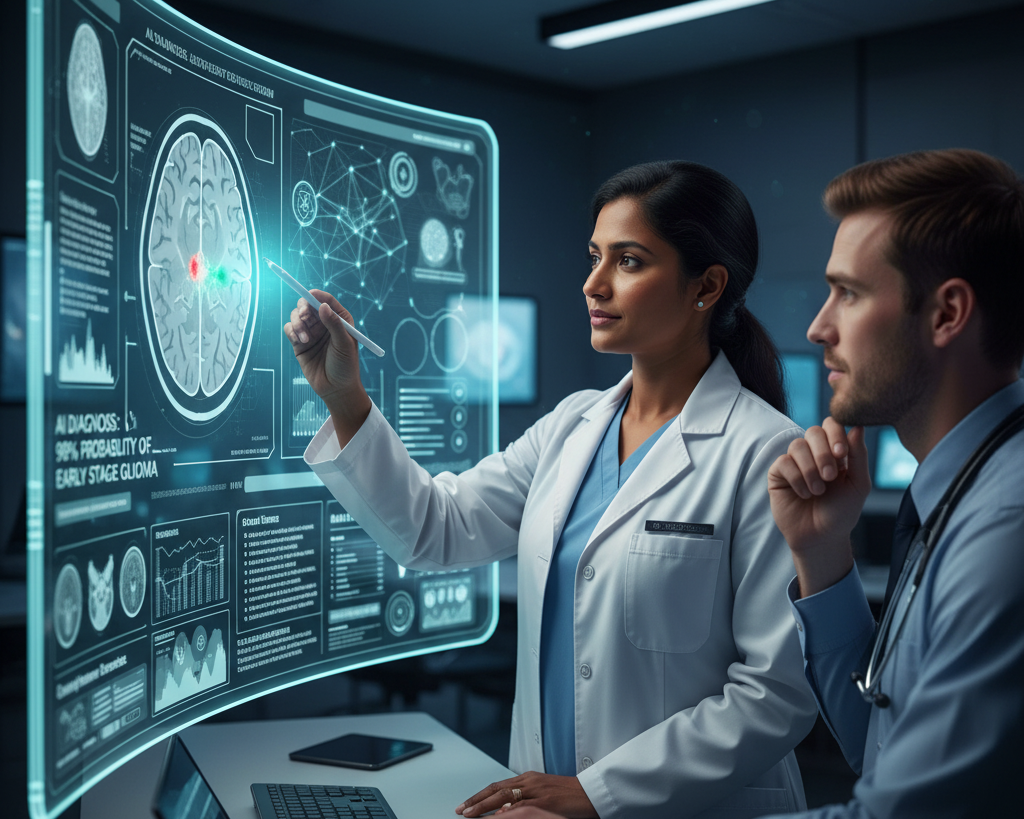
The most significant contribution of AI is that of clinical decision support. Clinicians used to decide based on intuition and patient history; with today's data-driven healthcare setting, however, quicker and more accurate information is needed. For instance, AI-enabled image analysis in radiology and pathology dramatically improves the accuracy of diagnosis and speeds up disease detection. By complementing medical expertise, AI enables doctors to make timely, well-informed decisions while dedicating more time to patient communication and quality care.
-
Processing huge medical data in no time
-
Spotting anomalies and disease patterns
-
Providing evidence-based advice to doctors
Predictive and Preventive Medicine: From Intervention to Prevention
AI is transforming medicine from reactive therapy to proactive prevention. AI detects potential health hazards even before a patient falls ill via predictive analytics. Predictive models are also utilized by hospitals to predict patient volume, efficiently distribute resources, and coordinate staffing. This predictive strategy saves lives and dollars—transmogrifying healthcare into a prevention model.
-
Round the clock monitor vital signs
-
Detect warning signs of disease in their earliest form
-
Facilitate timely intervention and minimize hospital readmission
AI Personalization: Treating Each Patient Individually
AI facilitates personalized medicine, with treatment regimens matched with an individual's genetic makeup, medical history, and lifestyle. Through the integration of genetic, medical, and behavioural information, AI delivers the right care at the right time—better outcomes and patient satisfaction
-
Identifies optimal treatments for a patient's specific genetic makeup
-
For cancer treatment, for example, AI forecasts how different cancers respond to different treatments
-
Minimizes side effects by adapting therapy

Redesigning Hospital Operations with Intelligent Automation
Administrative tasks like scheduling, billing, and records management tend tomake healthcare systems sluggish. This not only enhances operational effectiveness but also shortens wait times and overall patient experience—freeing medical professionals to do what really counts care
-
Streamlining appointment scheduling and billing
-
Automating documentation and reporting
-
Forecasting staffing and resource requirements
Improving Patient Experience and Engagement
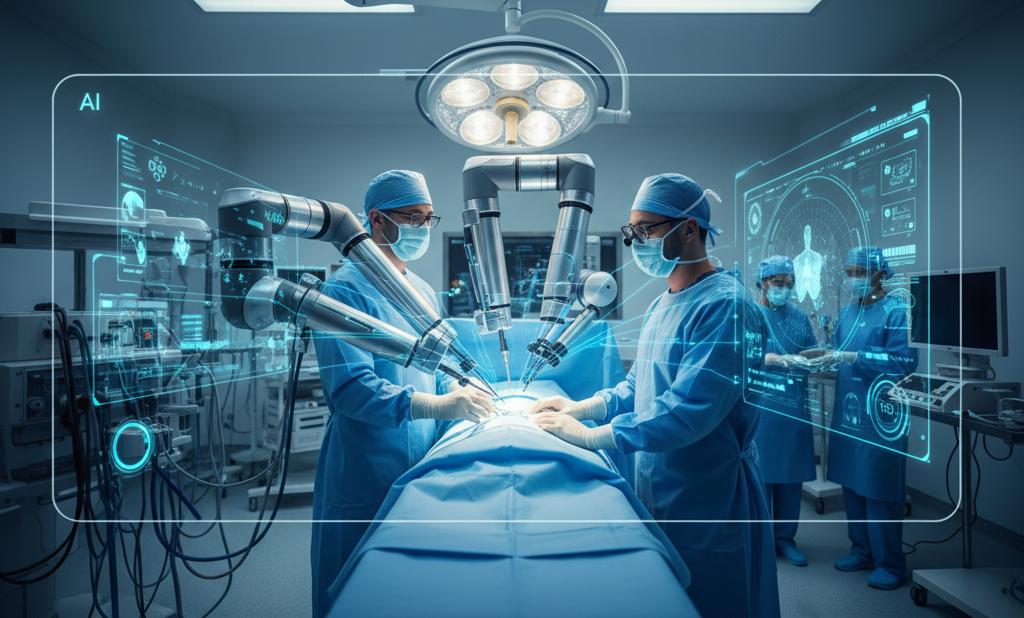
AI is revolutionizing patient engagement with virtual assistants, Chabot’s, and wearable technology. AI-based communication builds more effective patient-provider relationships, making people proactive in their health management
-
Scheduling appointments and tracking symptoms
-
Receiving personalized reminders and education
-
Tracking health in real time through connected devices

TechupR's Role in Healthcare AI Innovation
TechupR works to develop the healthcare digital revolution through intelligent, secure, and innovative AI technology. Our strength in depth involves crafting tailored AI-driven platforms for enhanced patient outcomes, streamlined processes, and evidence-based decision-making. Our goal is to enable healthcare organizations to responsibly use AI and develop systems that are patient-focused, safe, and intelligent. Our healthcare technology solutions are:
-
AI-Powered Analytics Platforms – Delivering real-time clinical data for faster diagnosis and treatment.
-
Intelligent Patient Management Systems – Efficient documentation and workflow automation.
-
Healthcare IOT Integration – Merging wearable sensors, monitoring devices, and dashboards for continuous care.
-
Cloud-Based Healthcare Solutions: Providing data protection, scalability, and GDPR and HIPAA compliance.

Data Privacy, Ethics, and Trust in AI Healthcare
Ethical data management is paramount as AI revolutionizes healthcare. Building trust and transparency in AI enables effective adoption and long-term success in the healthcare sector. Hospitals and developers must assign utmost priority to
-
Transparent algorithms for clinician trust
-
Open patient consent and secure data handling
-
Bias-free datasets for unbiased treatment
-
Accountability of AI recommendations

The Future of Healthcare AI
The future of healthcare AI is predictive, personalized, and pervasive. The future of medicine is using the analytical strength of AI along with human compassion to make a smarter, faster, and more compassionate healthcare system
-
Predictive Analytics – Prediction of disease outbreaks and early detection of high-risk patients
-
Remote Monitoring – Continual monitoring of health in real-time with digital Biomarkers
-
Accelerated Drug Discovery – Applying AI to filter through data and select good candidates for drugs quickly

Conclusion
AI is no longer in the future—it's changing healthcare now. From healthcare decision-making to hospital operations and customized treatments, AI is optimizing healthcare as more efficient, more inclusive, and more proactive.
We are at TechupR dedicated to driving this change by equipping healthcare centres with next-generation AI solutions that combine technology and empathy—to create a healthier, more interconnected world.
At TechupR, we've helped startups worldwide design apps that not only look good but also feel great to use and grow rapidly. Let's build your next big success story.
FAQS
Frequently Asked Questions
