
 About Us
 FAQs
FAQs Blogs
Blogs Career
-
- UI/UX/ Design
- MVP Application Development
- Mobile App Consultancy
-
Native App
Development
- (1) iOS App Development Services
- (2) Android App Development Services
- Cross Platform App Development
- Mobile App maintenance and Services
- Hire Expert Mobile Application Developers
-
- Custom Web Application Development
- Enterprise Web Application Development
- Full Stack development
- Single Page Application Development
- Progressive Web Appplication Development
- Content Management System (CMS)
- Legacy System Migration
- eCommerce Solutions
- Hire Expert Web Application Developer
- Web Development Consultancy Service
 Software Development
 Mobile Application Development
 Web Application Development
 Requirement Assessment & Flawless Project Execution
 Product Prototypying
 Cloud & Infrastructure
 AI / ML
 Quality Assurance
 Data Analytics
 Hire Dedicated Developers
 Healthcare
 Logistics
 Finance
 Education
 Manufacturing
 Immigration
 Real Estate
 E-Commerce
 Retail
 Sports
 Furniture
 Garment
 Media & Entertainment
 Portfolio
 Case Studies
Contact Us
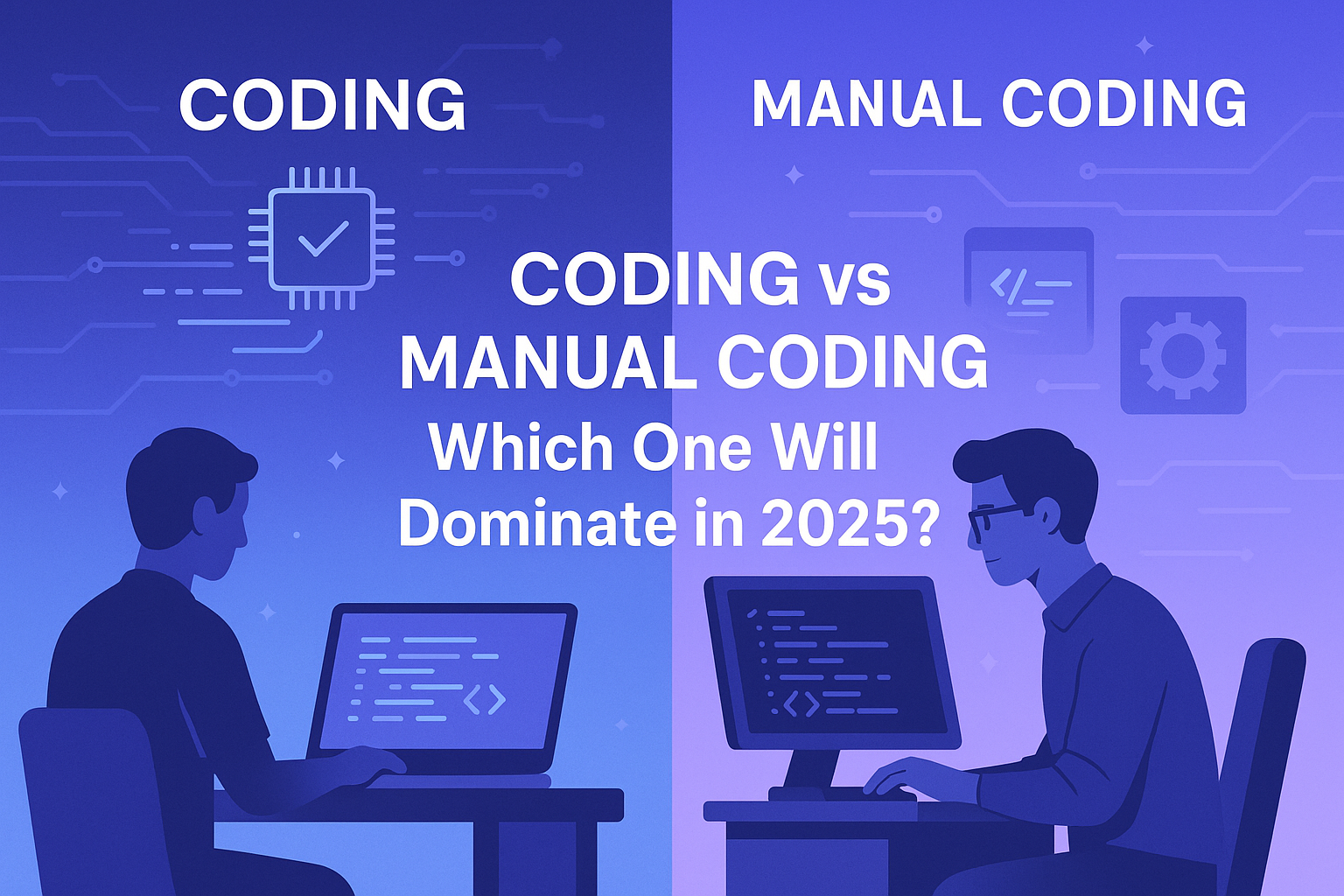
Vibe Coding vs Manual Coding: Which One Will Dominate in 2025?
Let’s explore their strengths, trade-offs, and what it all means for the future of development.
Author :
Jaimin Patel (TechupR)
12 May 2025

As AI becomes a greater force in development, a new term coined by Andrej Karpathy in early 2025 has sparked major interest: Vibe Coding. This AI-assisted approach is redefining how developers interact with code—using natural language to instruct AI to build it. But how does it stack up against traditional Manual Coding?
What Is Vibe Coding?
Vibe coding uses AI to generate code based on natural language prompts. Instead of writing each line manually, developers describe what they want, and the AI writes the code.
- Natural Language Interface – No need to memorize syntax
- Rapid Prototyping – Fast creation of MVPs
- Abstracted Complexity – Focus on design and logic
- Iterative Refinement – Prompt, review, and refine
- AI-Powered Code Generation – Code is generated from large language models
What Is Manual Coding?
Manual coding is the traditional way of writing software—line by line, with deep understanding and control over syntax and architecture.

-
Deep Technical Knowledge – Strong foundation needed
-
Granular Customization – Tailor code to complex needs
-
Code Quality & Maintainability – Follow best practices manually
-
Manual Debugging & Testing – Hands-on troubleshooting
-
Direct Control – Every line is yours
Comparison Table: Pros & Cons
Vibe Coding
| Feature | Pros | Cons |
|---|---|---|
| Speed | Fast prototyping, saves time on boilerplate | Risk of inefficient code if prompts lack clarity |
| Accessibility | Allows non-coders to contribute | Can reduce core coding skill development |
| Productivity | Automates repetitive work | May cause technical debt if not reviewed |
| Innovation | Encourages experimentation | Security risks in unreviewed AI code |
| Learning | Teaches syntax via AI output | Overreliance may hinder deep learning |
Manual Coding
| Feature | Pros | Cons |
|---|---|---|
| Control | Total customization and optimization | Time-consuming for basic/repetitive tasks |
| Understanding | Strong grasp of CS concepts | High learning curve for beginners |
| Code Quality | Clean, maintainable code with discipline | Varies based on developer skill |
| Security | Developers fully manage vulnerabilities | Human error remains a factor |
| Flexibility | Adapts well to complex systems | Slower pace for iterative changes |
| Scalability | Long-term maintainability through clean architecture | Complex to scale without proper planning |
Benefits & Drawbacks of Vibe Coding
Benefits
-
Increased Efficiency
-
Fast Prototyping
-
Easier Experimentation
-
Reduced Cognitive Load
-
Inclusive Development (Non-technical contributors)
Losses
-
Skill Degradation
-
Loss of Fine Control
-
Technical Debt
-
Security Gaps
-
AI Dependence
-
Decline in Code Craftsmanship

Future Outlook: What Lies Ahead
Predictions
-
Hybrid Dominance
A blend of manual + vibe coding will become standard
-
Startup Adoption
Ideal for MVPs and agile workflows
-
IDE Integration
AI will be native to most coding environments
-
Rise of Prompt Engineers
Experts in crafting AI prompts
-
AI Refactoring Tools
Smarter code clean-up and optimization

Developer Risks
-
Skill Erosion
Especially for beginners
-
Job Displacement
Routine coding tasks at risk
-
Soft Skill Gaps
Collaboration & critical evaluation skills required
-
Invisible Complexity Gap
Hidden logic can cause real-world problems
Developer Growth Areas
-
Architecture & Design
-
Problem Solving & Review
-
Prompt Engineering
-
AI Tool Development
-
System Integration & Workflow Orchestration
Conclusion
Vibe coding is not a replacement, but a revolution in how we build software. It accelerates development, lowers entry barriers, and empowers creativity. But it also demands discipline, review, and new skills.
The smartest developers will be those who blend the power of AI with the depth of manual coding—embracing both innovation and technical excellence to lead the next era of software development.
FAQS
Frequently Asked Questions
